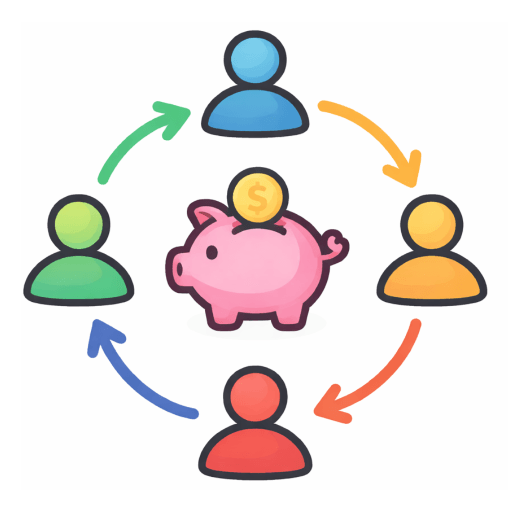
The mechanics of a tanda: A step-by-step example
Understanding how a tanda functions is straightforward once you break down the numbers. Imagine 10 coworkers agreeing to start a monthly tanda with a $200 contribution per person:
- Group Size: 10 participants
- Contribution: $200 per member every month
- Total Monthly Pool: $2,000 ($200 × 10 members)
- Duration: 10 months total (one round per month)
In month one, everyone deposits their $200. Member #1 receives the full $2,000 pot. In month two, everyone contributes $200 again, and Member #2 receives $2,000. This cycle continues until all 10 participants have collected their pot.
Why do millions of people choose tandas?
Tandas—also known globally as cundinas (Mexico), susú (Caribbean & West Africa), chit funds (India), and tandas or juntas (South America)—offer unique financial advantages over solo saving:
- Forced savings discipline: Social accountability motivates members not to skip payments.
- Zero interest and zero fees: Receiving early numbers functions like an interest-free loan funded by your peers.
- No banking hurdles: No credit score checks, minimum balances, or confusing bank paperwork.
- Community mutual support: Groups help members fund weddings, business inventory, school tuition, or emergency expenses.
Tanda vs. Traditional Solo Savings at a Glance
Here is how rotating savings compares directly to keeping money in a personal jar or standalone account:
| Feature | Tanda (ROSCA) | Solo Savings |
|---|---|---|
| Accountability | High (Group peer commitment) | Low (Easy to dip into savings) |
| Lump Sum Access | Immediate when your turn arrives | Slow gradual accumulation |
| Cost & Fees | 100% Free among peers | Subject to bank maintenance fees |
| Paperwork | None required | Bank ID, tax forms, credit checks |
The traditional headaches of organizing a tanda
While the concept is brilliant, running a tanda on pen-and-paper notebooks or crowded WhatsApp chats often leads to headaches. Organizers forget who paid, receipts get buried under hundreds of chat messages, and members dispute when their assigned turn arrives.
Frequently Asked Questions
Does Tandapp hold or manage my money?
No. Tandapp is strictly a coordination and record-keeping tool. Members pay each other directly via cash, bank transfer, or their preferred payment method. The app simply tracks turns, payment status, and receipts.
What happens if someone receives their pot early in the tanda?
Receiving an early number means you receive a lump sum ahead of time, but you remain obligated to continue contributing your fixed amount for all remaining rounds until the cycle finishes.
Is Tandapp free to download and use?
Yes, Tandapp is 100% free with no hidden charges, transaction fees, or annoying ads on both iOS and Android.

