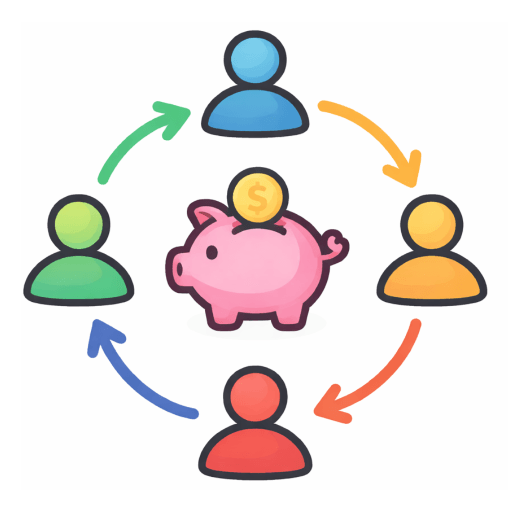
The behavioral psychology of saving: Why solo accounts fail
Economists and behavioral psychologists have long documented that human beings struggle with solo discipline. When money sits in a personal savings account, the temptation to withdraw small amounts for impulse purchases is constant. In a tanda, however, the social commitment to the group acts as a powerful psychological barrier against spending.
Comprehensive comparison: Tanda vs. Bank Account
Evaluate the critical factors between both savings vehicles:
| Factor | Tanda / ROSCA | Traditional Bank Account |
|---|---|---|
| Forced Discipline | Very High (Peer accountability) | Low to Medium (Self-directed) |
| Early Access to Pot | Yes, if you hold an early number | No, must wait to accumulate funds |
| Interest Earned | 0% (Nominal preservation) | 0.5% – 4% depending on product and inflation |
| Fees & Penalties | 0% in peer groups | Account fees, minimum balance penalties |
| Credit Check | None required | Identification, tax registry, credit verification |
| Ideal Use Case | Mid-term planned expenses & mutual aid | Emergency funds & long-term investments |
When is a tanda the superior option?
A tanda shines when you need to fund a specific upcoming purchase—such as holiday gifts, car maintenance, home repairs, or inventory for a small business—within a defined timeframe. The lump sum arrives on schedule, providing predictable capital without credit card interest rates.
When should you rely on a bank account?
Traditional banks excel for long-term emergency funds (3–6 months of living expenses) and high-yield compound interest investments over multiple years. Money that you might need at an unpredictable moment on any given day should stay in an emergency fund.
The winning formula: Combine both strategies with Tandapp
Smart savers do not have to choose between the two. The optimal strategy is using a bank account for your emergency cushion while joining a tanda for community motivation and disciplined lump-sum milestones.
Frequently Asked Questions
Does money in a tanda lose purchasing power to inflation?
Over short cycles (3 to 6 months), inflation impact is minimal. However, early numbers gain an advantage by spending the lump sum earlier in the cycle.
Is participating in a tanda legal?
Yes. Private peer-to-peer rotating savings between consenting adults are completely legal informal financial arrangements around the world.
How does Tandapp keep personal savings private?
Tandapp includes a dedicated Personal Savings Tracker that is completely separated from your tanda groups. No other user can see your private targets or balances.

